
Dr. Robert Eisen is an esteemed dentist with a wealth of experience in the field. His commitment to excellence is evident through his involvement in various professional associations and dental study groups. He further honed his expertise with a post-graduate program in Cosmetic Dentistry at the University of Buffalo in 1995 and by graduating from the prestigious Pankey Institute, a world-renowned post-graduate dental training facility. Beyond his professional accomplishments, Dr. Eisen is deeply committed to serving the community, contributing to establishing a Dental Clinic for disadvantaged youth in Toronto, ON. His passion for dentistry and patient compassion make him a highly regarded and trusted practitioner.
Why Do Teeth Crack? Causes of Cracked Tooth Syndrome
Teeth are designed to withstand significant pressure from daily chewing, but even the strongest enamel can develop fractures over time. Small cracks in a tooth may begin as microscopic lines that are barely noticeable, yet they can gradually expand and lead to discomfort, sensitivity, or structural damage.
Understanding how tooth cracks form, recognizing early warning signs, and seeking timely dental care are essential for preventing more serious complications. With modern diagnostic techniques and restorative treatments, many cracked teeth can be stabilized and preserved when diagnosed early.
Key Takeaways
- Cracked tooth syndrome (CTS) occurs when small fractures develop in the enamel and extend into deeper layers of the tooth.
- The most common types of cracks include craze lines, fractured cusps, and split teeth.
- The earliest symptoms often include sharp pain when biting, sensitivity to hot or cold foods, and intermittent discomfort.
- Some tooth cracks can remain painless initially, especially if the fracture has not reached the inner pulp tissue.
- Dentists identify different crack types, including craze lines, fractured cusps, cracked tooth syndrome, split teeth, and vertical root fractures.
- Cracked teeth can often be treated successfully if diagnosed early. Common treatments include dental crowns, bonding, root canal therapy, or extraction in severe cases.
- Preventive habits such as wearing night guards, avoiding hard foods, and attending regular dental exams significantly reduce the risk of tooth fractures.
- Most cracked teeth can be preserved with modern restorative dentistry when diagnosed before the fracture reaches the root.
Why Do Teeth Crack? Causes of Cracked Tooth Syndrome
Teeth appear extremely durable — and in many ways, they are. Enamel is the hardest tissue in the human body, even stronger than bone. Yet despite that strength, teeth can still fracture under the right conditions. Cracks may begin as microscopic lines that gradually spread through the enamel and dentin.
Cracked tooth syndrome (CTS) describes a fracture in a tooth that may not be immediately visible on X-rays or during routine visual exams. Patients often notice symptoms first — sharp pain when biting, sensitivity to hot or cold foods, or discomfort that appears and disappears unpredictably.
Dental professionals consider CTS particularly challenging because cracks behave unpredictably. A fracture may remain stable for years or suddenly worsen if additional pressure is applied.
Clinical data show that cracked tooth syndrome most commonly occurs in adults aged 30 to 50 and is rarely diagnosed in younger patients. Molars are affected most often because they absorb the greatest chewing force during biting and grinding.
What is a cracked tooth, and how does it happen?
A cracked tooth is a fracture that develops in the outer enamel layer and may extend into the dentin or pulp. The process usually begins gradually rather than as a single, sudden break.
Every time we chew, the teeth absorb significant pressure. Studies estimate that molars can withstand bite forces between 200 and 900 newtons, depending on the individual and the type of food being chewed. Over years of repeated stress, microscopic fatigue can develop in the enamel.
These microfractures may remain harmless for a long time. However, if the crack deepens, it can begin to separate parts of the tooth structure. When chewing pressure opens and closes the crack, the internal pulp tissue may become irritated, leading to pain.
Dr. Rob Eisen, DDS, from Barrie Smile Centre, explains:
“Many cracked teeth begin with extremely small fractures that patients cannot see or feel at first. Over time, everyday chewing forces can cause those tiny cracks to expand, eventually leading to discomfort or structural weakness.”
Dentists therefore monitor early signs carefully, particularly when cracks are discovered during examinations.
Types of tooth cracks
Different cracks affect teeth in different ways. Some remain purely cosmetic, while others threaten the tooth's structural stability.
| Type of Crack | Description | Severity | Typical Treatment |
|---|---|---|---|
| Craze Lines | Tiny surface cracks in enamel | Cosmetic only | Usually none required |
| Fractured Cusp | A portion of the chewing surface breaks | Moderate | Dental crown |
| Split Tooth | Crack extends vertically, dividing the tooth | Severe | Often, extraction or advanced restoration |
Craze lines
Craze lines are extremely fine cracks that appear in the enamel surface. They are common in adults and usually develop from normal wear.
Because they affect only the enamel layer, they typically do not cause pain or sensitivity. Dentists often identify craze lines during routine cleanings. Treatment is rarely necessary unless aesthetics are a concern.
Fractured cusp
A fractured cusp occurs when part of the tooth’s chewing surface breaks away. This type of crack often forms around large fillings or weakened enamel, where the remaining tooth structure can no longer support chewing pressure.
Unlike craze lines, fractured cusps may cause discomfort when biting. Dentists often place a dental crown on the tooth to stabilize the remaining structure.
Split tooth
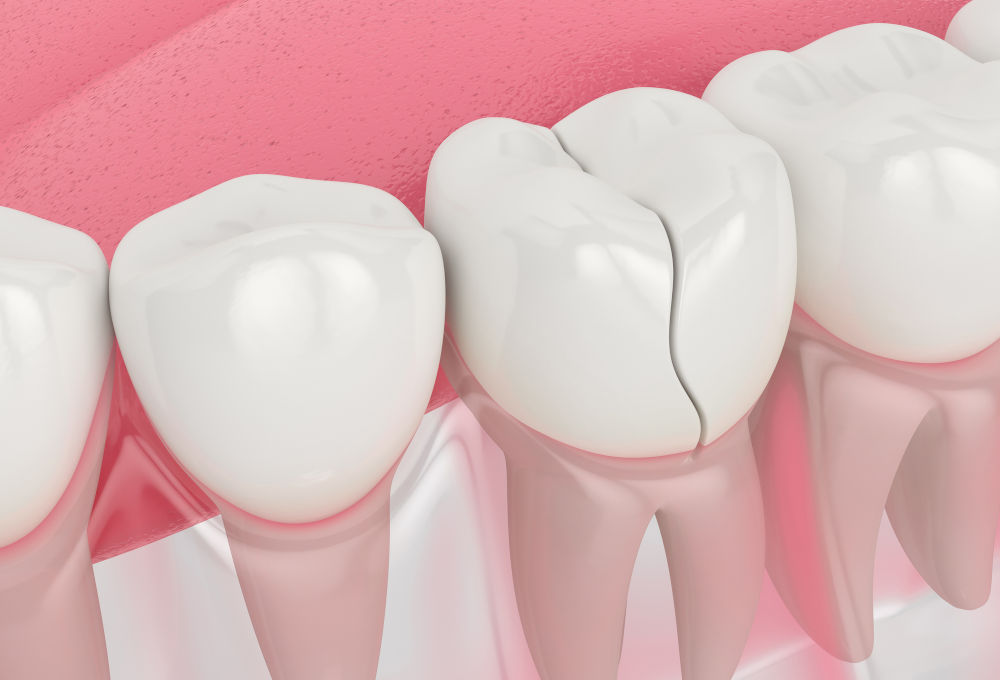
A split tooth represents the most severe type of crack. The fracture extends from the chewing surface toward the root, effectively dividing the tooth into segments.
When this happens, the tooth often cannot be fully preserved. Treatment may involve removing a portion of the tooth or extraction, depending on the severity.
Why do teeth crack in the first place?
Teeth crack primarily because of mechanical stress combined with structural weakening. Over time, the enamel experiences repeated pressure from chewing, temperature changes, and other forces.
Even small daily stresses accumulate. Research shows that repeated cyclic loading — the type of pressure created during normal chewing — can gradually fatigue tooth structure and increase the risk of cracks or fractures over time.
Several factors contribute to this process:
- Chewing hard foods such as ice, nuts, or hard candies
- Teeth grinding or clenching (bruxism)
- Large dental fillings that weaken the remaining tooth structure
- Sudden temperature changes, such as consuming very hot and cold foods together
- Trauma or injury to the mouth
Dr. Jason Wong, DDS, explains:
“Teeth are designed to handle significant force, but when pressure becomes excessive or repetitive — such as with grinding or clenching — the enamel can eventually fatigue and crack.”
In many patients, multiple factors combine to increase fracture risk.
Natural tooth wear over time
Age is one of the most significant predictors of cracked teeth. Over decades of chewing, enamel gradually loses some of its resilience.
Several biological changes occur with ageing:
- Enamel becomes more brittle due to mineral changes
- Teeth experience cumulative microdamage
- Dental restorations may weaken the surrounding tooth structure
Tooth fractures are more commonly observed in middle-aged and older adults. Over time, repeated chewing forces and natural tooth wear can gradually weaken enamel, increasing the risk of cracks or fractures.
Another factor is the history of restorative dentistry. Teeth that have undergone multiple fillings or root canal treatments may be structurally weaker than untouched teeth.
What are the most common cracked tooth symptoms?

Cracked teeth often produce symptoms that appear subtle at first. Many patients notice discomfort only while chewing or when pressure is released from the tooth. These symptoms occur because the crack allows tiny movements in the tooth structure, which can irritate the pulp — the inner tissue containing nerves and blood vessels.
According to the American Association of Endodontists, cracked teeth commonly cause pain when chewing or biting and sensitivity to hot or cold foods because the crack allows pressure and temperature changes to affect the inner tooth layers.
One of the most confusing aspects of cracked tooth syndrome is that symptoms may appear intermittently rather than constantly. Patients sometimes report that the discomfort disappears for days or weeks before returning again.
Common early signs include:
- Sharp pain when biting down, especially when releasing pressure
- Sensitivity to hot or cold foods or beverages
- Intermittent discomfort that is difficult to locate
- Pain when chewing hard foods
- Swelling of the surrounding gum tissue in more advanced cases
These symptoms often occur because the crack opens slightly during chewing and then closes again when pressure is released. That movement can irritate the pulp or surrounding ligaments.
Dr. Rob Eisen, DDS, from Barrie Smile Centre, explains:
“Many cracked teeth produce symptoms only when a patient bites down on certain foods. Because the pain can come and go, people sometimes delay seeking care, but early evaluation is important before the crack spreads deeper.”
Symptoms dentists look for
Dentists rely on several clinical indicators when assessing a possible cracked tooth. Because fractures are sometimes difficult to see with the naked eye, diagnosis often depends on both patient symptoms and diagnostic tests.
Dentists commonly look for:
- Pain triggered during bite tests
- Localized sensitivity in one tooth
- Visible fracture lines in enamel
- Pain that occurs when the chewing pressure is released
- Gum inflammation near a specific tooth
Special diagnostic tools, such as magnification, dental dyes, or specialized bite sticks, may also be used to help isolate which tooth is causing the discomfort.
Cracked teeth can cause a range of symptoms, depending on the depth and location of the fracture.
| Symptom | Possible Cause | Clinical Significance |
|---|---|---|
| Pain when chewing | Crack flexing under pressure | Early indicator of cracked tooth syndrome |
| Sensitivity to hot or cold | Exposure of dentin through a crack | May indicate a deeper fracture |
| Intermittent pain | Crack opening and closing | Common with incomplete fractures |
| Gum swelling near the tooth | Bacterial infiltration through the crack | Possible infection |
| Sharp pain when releasing the bite | Movement of cracked segments | Typical CTS symptom |
Because symptoms vary widely across patients, dentists combine clinical examination, imaging, and symptom history to confirm the diagnosis.
Is it possible to have a cracked tooth with no pain?
Yes — it is entirely possible for a tooth to have a crack without causing any pain at first. Many small fractures affect only the outer enamel layer, which lacks nerves. As a result, patients may not notice any symptoms until the crack deepens.
Several factors determine whether a crack causes pain:
- Depth of the fracture
- Whether the crack reaches the dentin or pulp
- The amount of chewing pressure applied
- Presence of bacteria or inflammation
Small enamel cracks, for example, may remain stable for years without symptoms. However, deeper fractures can begin affecting the pulp and eventually lead to sensitivity or infection.
Dr. Jason Wong, DDS, explains:
“Some cracks are discovered during routine exams even though the patient has no symptoms. That doesn’t necessarily mean the tooth is healthy — it simply means the fracture has not yet reached the nerve.”
Because cracks can worsen gradually, dentists often recommend monitoring suspicious teeth during regular dental visits.
Hidden cracks dentists detect on X-rays
Detecting cracks can sometimes be challenging because very small fractures may not appear clearly on standard dental X-rays. However, imaging can still reveal secondary signs that suggest a crack may be present.
Dentists often rely on X-rays to identify:
- Bone loss near the root of a tooth
- Changes in the periodontal ligament space
- Deep or complex restorations that weaken tooth structure
- Signs of vertical root fractures
In addition to X-rays, dentists may use:
- Transillumination, where light is passed through the tooth to reveal fracture lines
- Dental microscopes or magnification
- Bite tests to isolate the affected tooth
These diagnostic tools allow clinicians to detect cracks early, even when patients do not yet feel pain.
What treatments are available for a cracked tooth?

Treatment for a cracked tooth depends primarily on how deep the crack extends and which part of the tooth is affected. Minor fractures affecting only the enamel may require minimal treatment, whereas deeper cracks that reach the pulp may require more advanced care.
Dentists evaluate several factors before recommending treatment:
- The depth of the fracture
- Whether the pulp is affected
- The location of the crack
- The overall strength of the remaining tooth structure
The most common treatments include bonding, crowns, root canal therapy, and extraction in severe cases.
Dental bonding
Dental bonding may be used for small cracks or minor structural damage. A tooth-coloured composite resin is applied to the tooth's surface to seal the crack and restore strength.
Bonding is often recommended when:
- The crack is superficial
- The tooth structure remains mostly intact
- Cosmetic improvement is needed
This treatment is relatively quick and minimally invasive, but may not be suitable for deeper fractures.
Dental crowns
Dental crowns are one of the most common treatments for cracked teeth. A crown covers the entire visible portion of the tooth, protecting it from further stress and preventing the crack from expanding.
Crowns are typically recommended when:
- A crack extends into the dentin
- A fractured cusp has weakened the tooth
- Large fillings have compromised the tooth structure
Root canal therapy
If the crack reaches the pulp and causes inflammation or infection, root canal therapy may be necessary. This procedure removes the infected pulp tissue and seals the tooth internally before placing a protective restoration such as a crown.
Tooth extraction
Extraction may be necessary if the tooth is severely fractured or split, especially when the crack extends below the gumline or into the root.
In these cases, dentists may recommend replacing the tooth with dental implants or bridges to restore function.
Choosing the right treatment
Selecting the most appropriate treatment requires careful evaluation of the fracture type and its impact on the tooth.
Dentists may recommend different treatment options depending on the severity of the crack.
| Treatment | Best For | Main Purpose | Tooth Preservation |
|---|---|---|---|
| Dental Bonding | Small enamel cracks | Sealing and cosmetic repair | High |
| Dental Crown | Cracked tooth or fractured cusp | Protect and strengthen the tooth | High |
| Root Canal Therapy | Crack affecting pulp | Remove the infection and save the tooth | Moderate–High |
| Extraction | Severe fractures or split teeth | Remove the damaged tooth | Not preserved |
How can you prevent your teeth from cracking?
Although not every cracked tooth can be prevented, many risk factors are controllable through good oral habits and preventive dental care. Teeth experience constant pressure from chewing, and protecting them from excessive stress is one of the most effective ways to reduce fracture risk.
Preventive strategies focus on strengthening tooth structure and minimizing excessive force.
Protective habits
Several daily habits can significantly reduce the likelihood of tooth fractures.
- Avoid chewing hard foods such as ice, hard candy, or popcorn kernels
- Wear a custom night guard if you grind your teeth during sleep
- Maintain regular dental exams and cleanings
- Address cavities or weakened teeth before structural damage develops
- Avoid using teeth to open packages or bite non-food objects
These habits help reduce stress on enamel and preserve long-term tooth integrity.
Step-by-step guide to protecting your teeth
- Schedule regular dental exams so dentists can identify small cracks or weakened teeth early.
- Wear a night guard if you experience bruxism or jaw clenching during sleep.
- Avoid chewing very hard foods that can create sudden pressure on molars.
- Treat cavities or damaged fillings promptly to prevent structural weakness.
- Maintain good oral hygiene, including brushing and flossing daily.
These preventive steps protect teeth from both gradual enamel fatigue and sudden fractures.
Several common preventive measures can help reduce the risk of tooth cracks.
| Prevention Strategy | Why It Helps | Who Benefits Most |
|---|---|---|
| Night guards | Reduce grinding pressure on teeth | Patients with bruxism |
| Avoiding hard foods | Prevent sudden tooth fractures | All patients |
| Regular dental exams | Detect cracks early | Adults and older patients |
| Treating cavities early | Prevents weakened tooth structure | Patients with restorations |
What should you remember about cracked tooth syndrome and dental treatment?
Cracked tooth syndrome is a common dental condition that can affect patients of many ages. While some cracks remain minor, others may worsen over time if left untreated. Because many cracks are initially very small, they may not cause noticeable symptoms in the early stages. Over time, however, repeated chewing pressure can gradually extend the crack and weaken the tooth structure.
The most important takeaway is that early diagnosis significantly improves treatment outcomes. When cracks are identified early, dentists can often stabilize the tooth before the fracture spreads to deeper structures. Early treatment may involve protective restorations, such as dental crowns, that help reduce stress on the damaged tooth. Acting quickly also increases the chances of preserving the natural tooth and avoiding more complex procedures later.
Frequently Asked Questions About Cracked Teeth
How serious is a cracked tooth?
The severity of a cracked tooth depends on how deep the fracture extends. Small enamel cracks may remain stable for years and often require little or no treatment. However, if the crack reaches the dentin or pulp, it can cause pain, sensitivity, and eventually infection. Early evaluation by a dentist is important because prompt treatment can often prevent the crack from worsening and help preserve the natural tooth.
Can a cracked tooth heal on its own?
Unlike bones, teeth cannot heal themselves. Once enamel develops a fracture, it cannot regenerate. In some cases, very small cracks may remain stable and not cause symptoms, but they still require monitoring. Dentists may recommend protective treatments such as bonding or a dental crown to prevent the fracture from spreading.
How do dentists diagnose a cracked tooth?
Diagnosing cracked tooth syndrome can sometimes be challenging because fractures may not be visible on standard X-rays. Dentists typically combine several diagnostic methods, including bite tests, visual examination under magnification, dental dyes, and specialized imaging. These tools help identify subtle fracture lines and determine how deep the crack extends within the tooth.
When should you see a dentist for a possible cracked tooth?
You should schedule a dental appointment if you notice sharp pain when biting, sensitivity to hot or cold foods, unexplained discomfort while chewing, or swelling around a specific tooth. These symptoms may indicate a developing crack. Early diagnosis greatly improves the chances of stabilizing the tooth before the fracture spreads deeper.
Can a cracked tooth lead to infection?
Yes, a cracked tooth can allow bacteria to enter the inner pulp tissue if the fracture becomes deep enough. This may lead to inflammation, infection, or even the formation of an abscess. When this occurs, root canal therapy is often necessary to remove the infected pulp and preserve the remaining tooth structure.
What happens if a cracked tooth is left untreated?
If a cracked tooth is not treated, the fracture may gradually expand due to normal chewing pressure. Over time, the crack can extend deeper into the tooth, increasing the risk of severe pain, infection, or complete tooth fracture. In advanced cases, extraction may become the only viable treatment option.
Can a dental crown fix a cracked tooth?
Dental crowns are one of the most common treatments for cracked teeth. A crown covers the entire visible portion of the tooth, helping to hold the cracked segments together and protect the tooth from further pressure. This restoration significantly strengthens the tooth and often allows patients to continue using it normally.
Are cracked teeth common in adults?
Yes, cracked teeth are relatively common, particularly in adults between the ages of 30 and 50. Over time, repeated chewing pressure, tooth grinding, and natural enamel wear can weaken tooth structure. Molars are especially vulnerable because they absorb the strongest biting forces during chewing.


See what our patients are saying:
The Barrie Smile Centre is the best dental office I've ever been to. The staff is very friendly,professional and knowledgeable. They take away any anxiety and fear of going for a procedure. I highly recommend them!

Very clean, professional and friendly! They have done lots of work for me including 2 implants. I highly recommend them!
Very clean, professional and helpful. 2 other dentists previously tried to fix my composite veneer and both times it look awful and/or was the wrong colour. One trip here and everything was fixed!
Very friendly, helpful staff. Makes you feel welcome as soon as you enter. I needed a tooth removed and got in the same day I called. When I arrived I didn’t have to wait. I have numerous problem with my teeth and they came up with a solution. Thank you all so much.
Just got home from the Smile Centre and I'm thrilled with my results. Had Zoom whitening, and it was better than I expected. The attendant took the time to explain everything super thoroughly. She warned I may have sensitivity but so far so good. I wish I did it ages ago.
The first thing I noticed upon entering the building was the beautiful design plan and lovely staff. I was greeted at the door and made comfortable throughout my entire experience. Everything was explained to me in detail and the staff always made sure I fully understood. This is an amazing office and I would 10/10 recommend it!!
Amazing fast clean attentive friendly ! Im sold! Thankkk youuuuu guys !!!!!!! Had a wisdom.tooth taken out under sedation! All.went perfect and you guys were awesomee!
Every time I go to the Smile Centre in Barrie it’s an amazing experience! Everyone from the admin staff to the dentists are so helpful. Not only do they tell you your options (in my case options for a missing tooth), but they also explain the pros and cons of every option. I highly recommend the Smile Centre
Barrie Smile Centre is truly amazing I called and had an issue with with some tooth pain they were able to fit me in same day which I was truly grateful for. All the staff are kind and professional they truly care about there patients. Big thank you to Dr.Eisen for being so kind and helping me in this situation. I highly recommend Barrie Smile Centre 😃 Thanks again
Great family dentist, has always been on time for appointments. Doing a great job during these times with cleanliness as well! Very professional staff!